Boscia at Tswalu: Built into the earth, beside an ancient forest, under celestial skies
Boscia opened in August 2026 at Tswalu Kalahari Reserve under the creative direction of Luke Dale Roberts, creator of The Test Kitchen which, during its celebrated run, ranked among the World’s 50 Best Restaurants and won the Eat Out Restaurant of the Year title six times.
Boscia is, by his own description, his most personal project, and is where that restless pursuit of the perfect plate meets a landscape worthy of it.
The restaurant takes its name from the shepherd’s tree, Boscia albitrunca, the ecological keystone of Tswalu’s semi-arid landscape: a species that survives where little else endures, sending its roots as far as 68 metres into the earth to find water far below the surface. That relationship between what is visible and the hidden, between the surface and what lies beneath, is the logic that shaped everything about Boscia.
Built into the earth beneath a century-old farmhouse and surrounded by what may be the world’s largest congregation of shepherd’s trees, Boscia is one of the most audacious fine-dining ventures South Africa has seen, and one of the most remote.
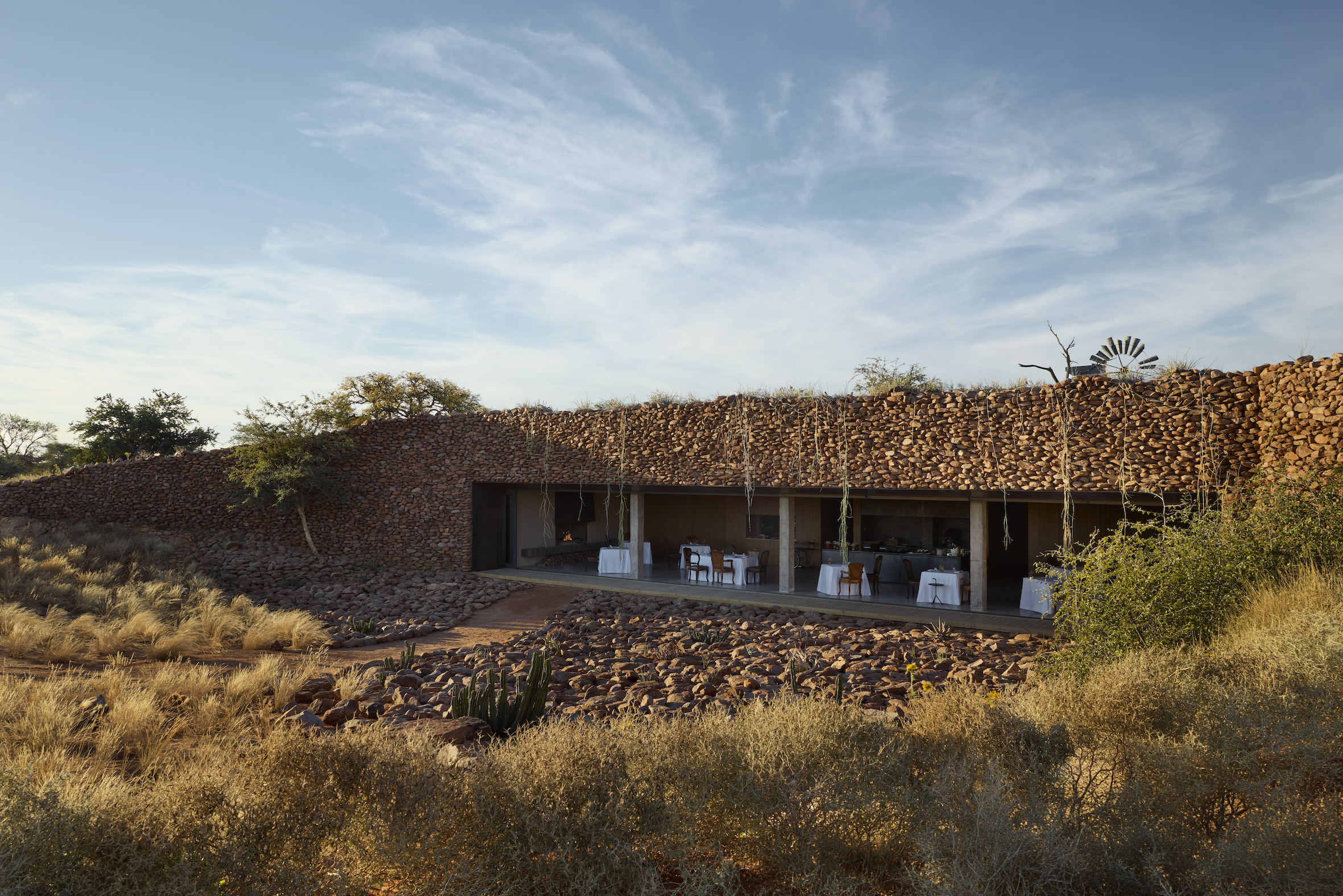
The restaurant has been conceived as an extension of the safari rather than a departure from it. Guests arrive after exploring the biologically significant Tswalu wilderness and find the same landscape waiting for them at the table. The kitchen is simply where the Kalahari continues.
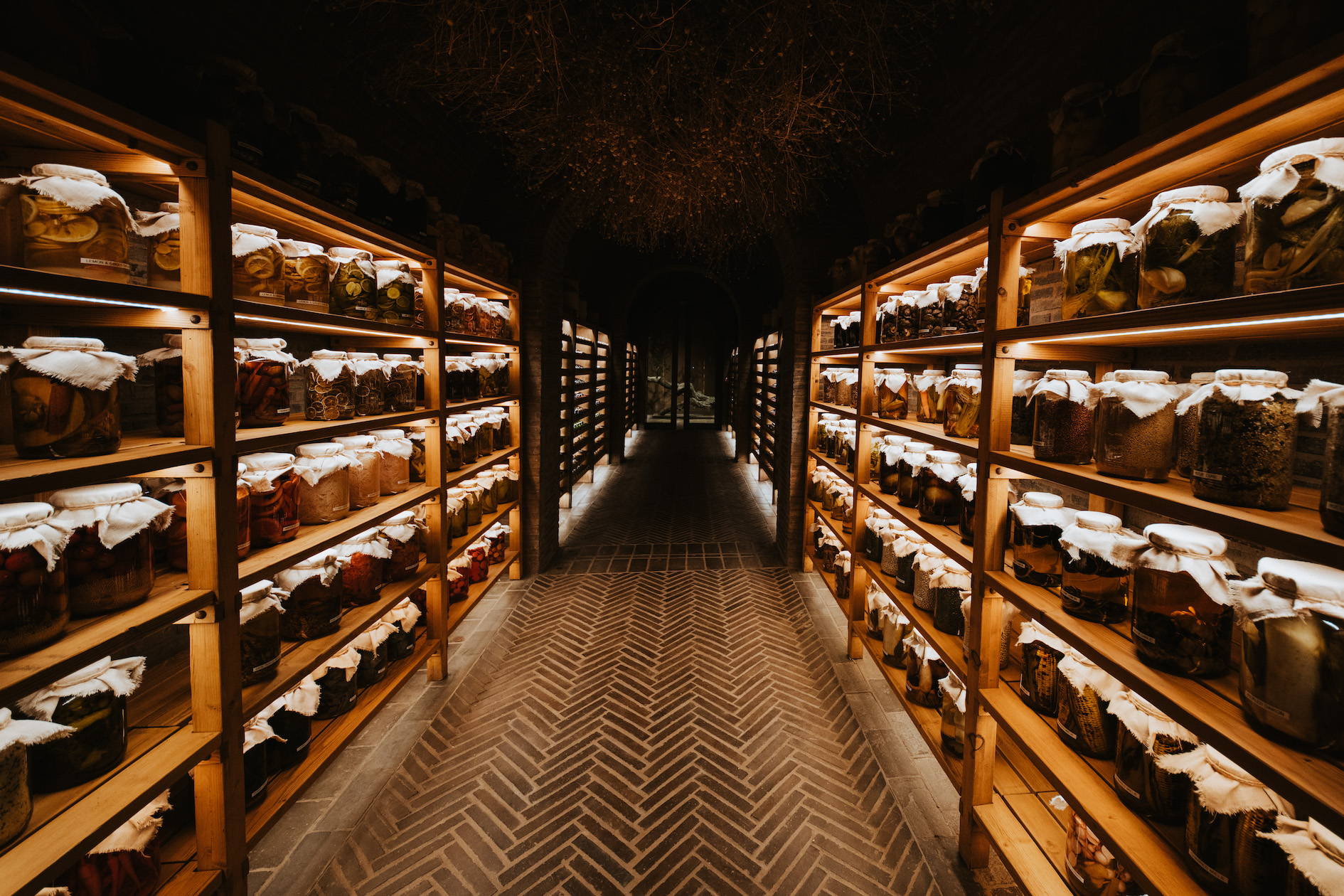
The dining experience unfolds across three distinct spaces. It begins at Boscia House, a century-old farmhouse where guests are welcomed with snacks and cocktails. From there, guests descend into the root cellar: gallery, library and working larder. Its shelves tell the story of a kitchen in permanent conversation with one of the most challenging environments on Earth: row upon row of fermented, pickled and preserved ingredients, each one a solution the Kalahari demanded. Preservation is at the centre of the kitchen’s philosophy.
A gallery beyond is anchored by a life-size bronze sculpture of the shepherd’s tree by Nic Bladen, who lived on the reserve during an artist residency in 2015.
Then the dining room: a return to the elements, the kitchen visible through an open pass, the Kalahari framed through glass beyond.
The five-course menu is led by head chef Dillan Kannemeyer and his team. Dale Roberts’ classical European training and Asian influences sit alongside venison, tsamma melons, Kalahari salt, local dates and wild rosemary.
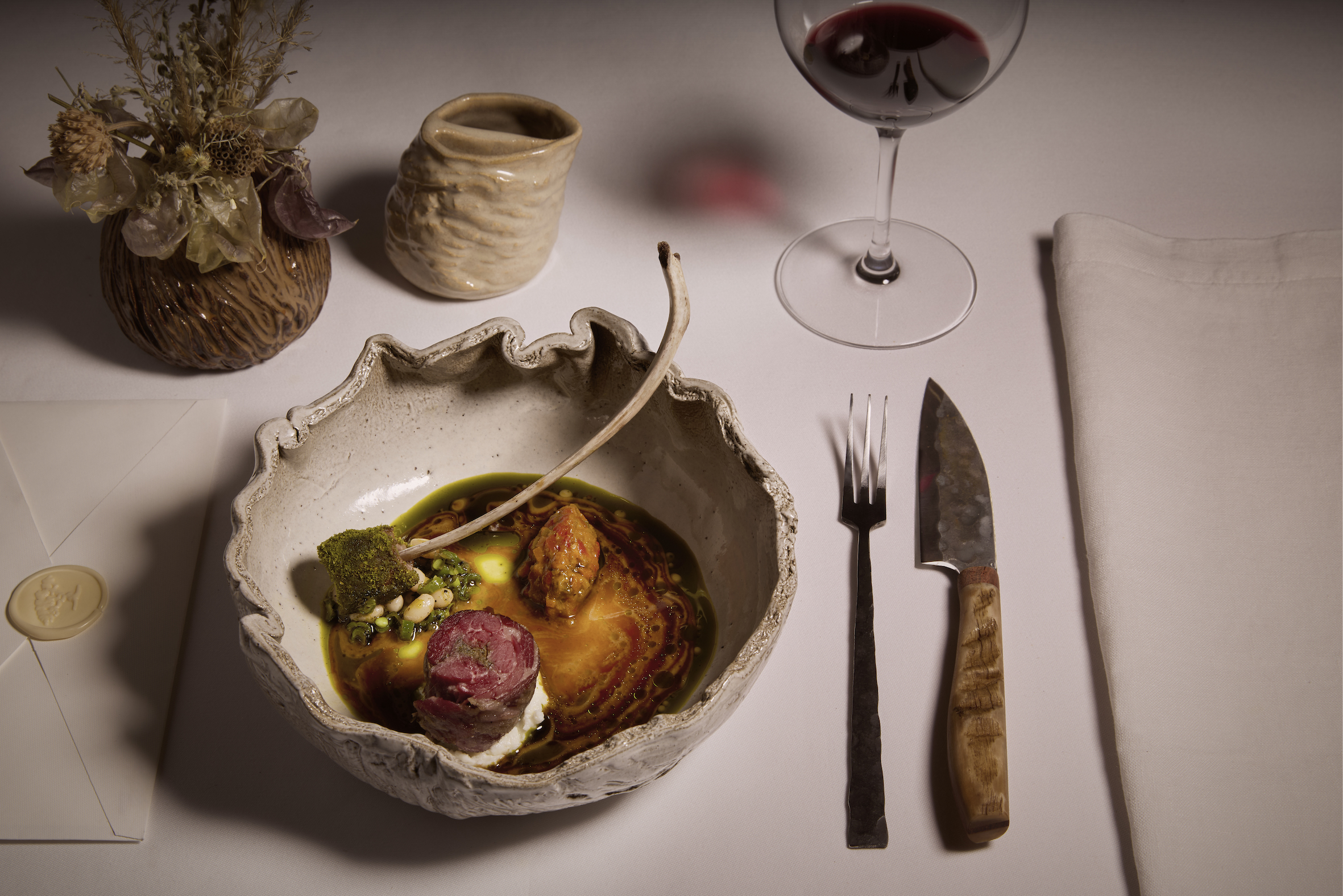
Meat is predominantly sourced, as much as 90%, from a butcher based in the Kalahari itself. South African wine pairings and non-alcoholic herbal infusion pairings are available throughout.
At the close of the evening, guests are collected beneath a large boscia tree that gives the restaurant its name. By then, the restaurant has receded to a narrow strip of light behind them, and the night sky has widened overhead.
“Tswalu got under my skin very quickly. There is enormous respect for the landscape, for conservation, for creating something meaningful rather than simply impressive. At this stage of my career, that matters to me,” comments Dale Roberts.
Every object on the table was commissioned for a specific dish, emerging from conversations between the chefs and South African artists and craftspeople including Conrad Hicks, Roché Muller, Wim Botha, Anton Kock and Hadley Craig.
“Tswalu has always been a place that rewards patience. Boscia is an expression of that same philosophy. Nothing about it is obvious. Everything about it, we hope, is worth the journey,” says Jonathan Oppenheimer, owner of Tswalu.
A dinner at Boscia is included for guests staying two or more nights at Tswalu. Boscia is also open to the public for Saturday lunches at R3 850 per person. Bookings open on the first of each month at 08h00 for the following month. For Saturday lunch reservations, book through Dineplan or email boscia@tswalu.com. A children’s menu is available with 24 hours’ notice.
Main image credit: Chris Joubert